Adding Protein Without Making the Dough Misbehave: Notes From the Bakery and Noodle Floor

When "high protein" lands on the R&D desk One of the easiest sentences to write in product development is "a bit more protein, but don't change the texture." It is also one of the hardest to deliver once it reaches the mixer, in bakeries and on noodle lines alike. The scene tends to repeat, and it usually starts the same way: protein goes in, and the dough changes character at once.
Some lines end up with a dough that is stiff and fights back, pulled into a sheet and then shrinking away so it will not hold its shape. Others get a sticky dough that clings to belts and blades and forces stops for scraping far more often than anyone wants. On the finished product side, the complaint is often dryness and brittleness. The bite is no longer the soft one consumers remember, and they notice from the first mouthful.
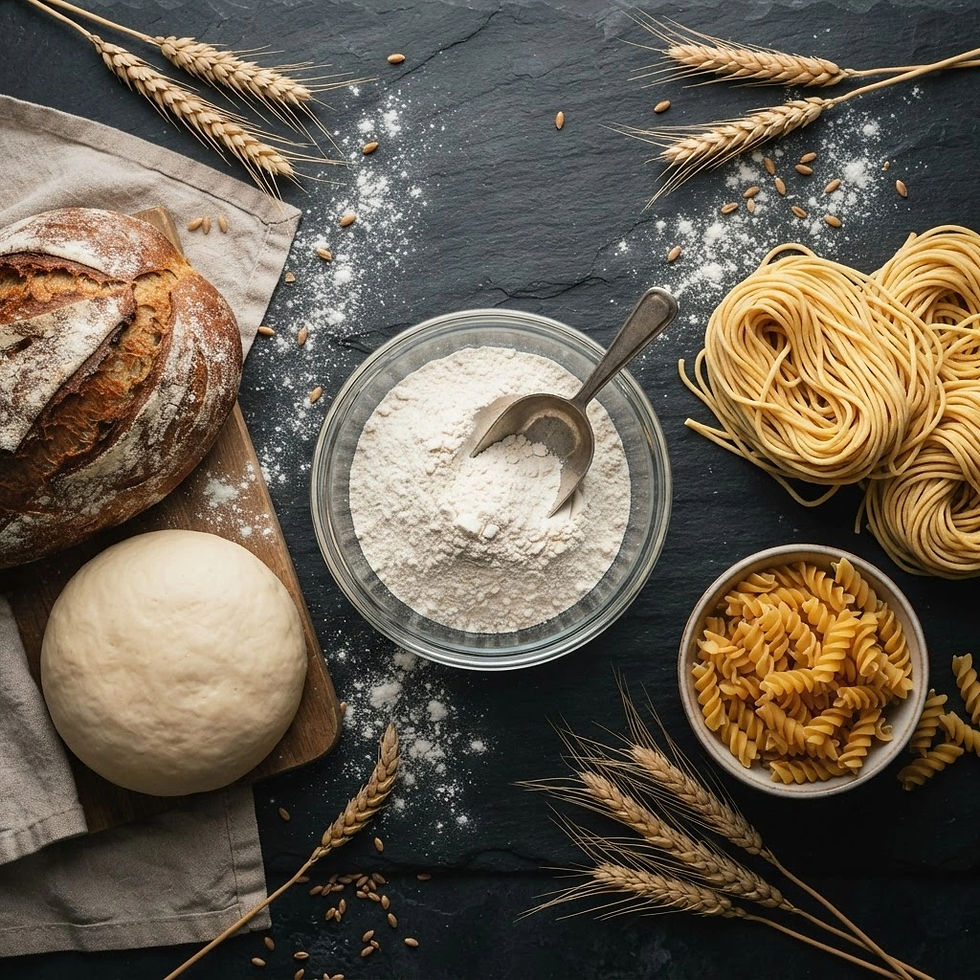
The cause is not mysterious. Many protein powders were never designed to get along with the water in a dough system. They compete for it, form tiny lumps that never disperse, or fail to survive the heat and shear of real production. What R&D actually needs is not just a higher protein number but a protein that lets the process keep running as it normally does.
Why a soluble hydrolyzed wheat protein answers the brief
Hydrolyzed protein has been broken down into smaller pieces, and that visibly changes how it behaves in a recipe. The ingredient discussed here is a wheat protein powder made from EU wheat, plant-based, with more than 82% protein. The first property worth looking at is solubility and ease of dispersion, because on the floor the trouble starts at the mixing stage. A powder that dissolves and disperses well means fewer hard little lumps in the dough, and an even spread helps every batch behave more like the last one, which matters for consistency between lots.

Process stability matters just as much. The ingredient holds up under shear, heat and acid. For any line with hard kneading, baking, or boiling and frying of noodles, an ingredient that does not fall apart along the way is worth a great deal. For chilled and frozen products, freeze/thaw stability also eases the worry that texture will change as the product moves through the cold chain.
For dough-focused teams, another point of interest is its role in dough optimization, including greater extensibility. That speaks directly to the dough that pulls and shrinks. It is best treated as a hypothesis to prove in the actual recipe and on the actual machines, not as a promise that every dough will turn smooth overnight. Water level, mixing time and the base flour will always have a big say.
From bakery to noodles and creams
The range of applications is wider than many people expect. On the bakery side it includes bread, burger buns, pizza, tortillas and crackers, as well as muffins, waffles, sponge cakes and granola bars. On the noodle side it covers instant noodles, pasta and UHT pasta. It also finds a place in fillings and creams, including vegan creams, where it plays a part in milk replacement.

That range says something. Very different systems, from a dough that has to rise, to noodles that are sheeted and boiled, to a cream with no flour at all, share the same underlying need: a protein that gets along with water and survives processing. That is exactly what the two core properties above describe. From a product-development point of view, it is an ingredient that can help teams build high-protein, lower-carb or vegan lines without rebuilding the whole production process.
The most worthwhile place to start is where the pain is clearest, such as a line where dough already shrinks or sticks. The difference will show up much faster there than on a line that is already running smoothly.
Before committing: labeling and on-site trials
The first thing to settle is gluten. This ingredient comes from wheat, and even after hydrolysis it remains an allergen that must be declared on the label. It is not suited to products positioned as gluten-free. Many projects lock the recipe first and think about the label afterwards, and end up redesigning packaging and pushing back the launch. It is better to bring regulatory into the conversation at the start of formulation, and to check the label name and any nutrition-claim conditions with the local authority, in Thailand the Thai FDA, before a production run.
The second point is on-site testing. The lab can say a lot, but the machine gives the more reliable answer. A staged approach works well: start with a small batch to watch dispersion and dough behavior, then run a short trial on the real line and watch three things. Does the dough stick to equipment? Does it still shape and cut the way it did before? And is the finished product soft or brittle after it has aged through its shelf life? Compare taste, color and aroma against the original recipe too, because eating quality is the first thing consumers judge.
Finally, usage levels should come from trial results in each plant's own recipe and line, not from figures passed around by word of mouth. For teams chasing a protein target, talking with an ingredient specialist and requesting a sample to test is the most direct first step. One trial is often worth more than ten guesses.
Want to try it in your recipe?
Our team is ready to support your sourcing needs. Sample available on request.
